

The Seakeeper Stabilizer Refit Process: WHAT TO EXPECT!
Everything you need to know on the Seakeeper Stabilizer Refit process can be found here.
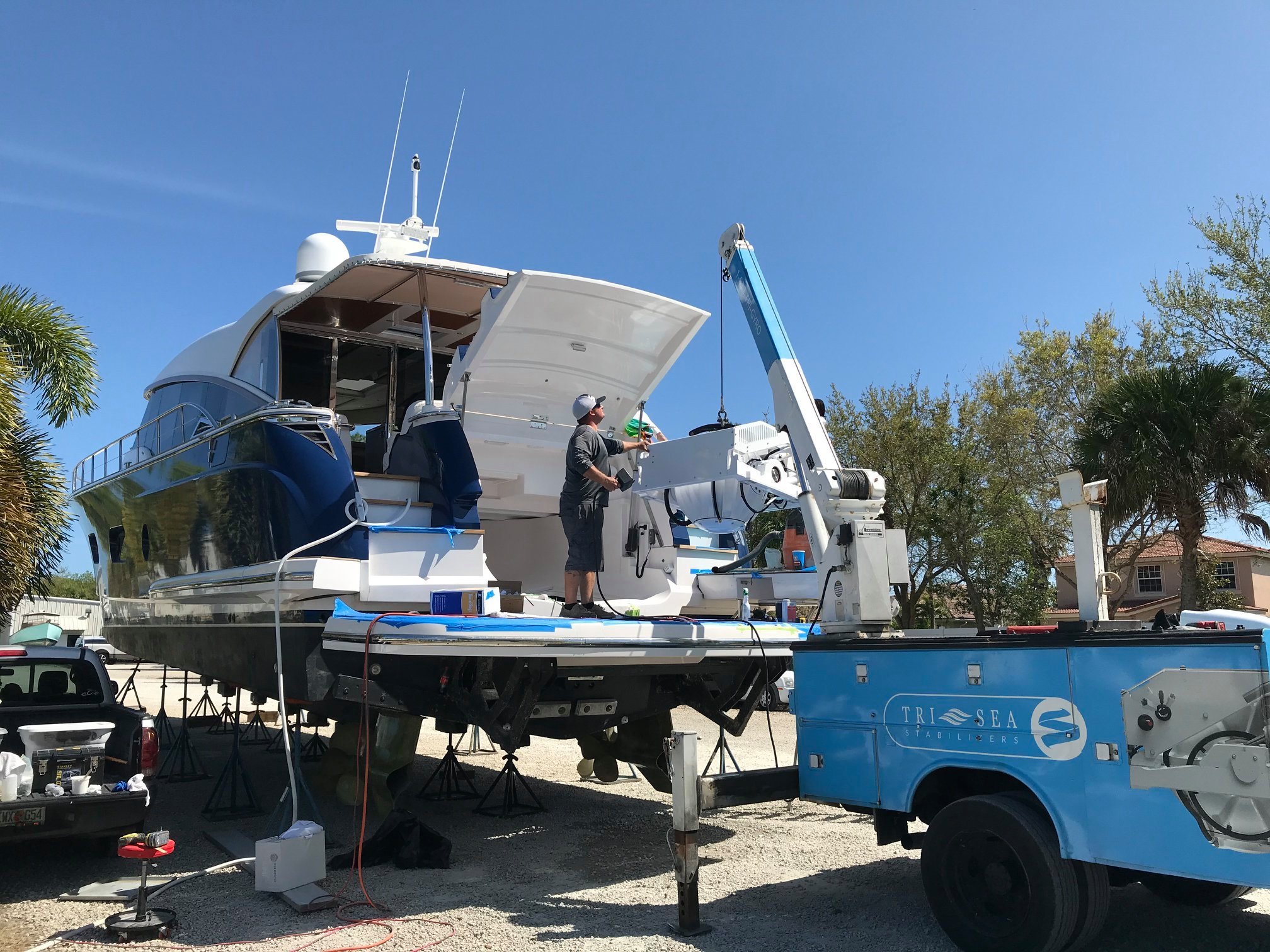
The Seakeeper Refit Process:
What to Expect!
We meet potential Seakeeper clients at boat show’s and Event’s as well as receive many calls and emails with request’s for Seakeeper information. Our very first priority is to educate everyone, on the Seakeeper product, as much as possible. By educating our future Seakeeper Installation and Seakeeper service clients on the front end of the process and letting them know exactly what to expect, we create an excellent experience as well as a customer who will trust us not only with the Seakeeper refit process but their future Seakeeper maintenance and services.
Our first way of educating our clients is immediately providing them with our custom Seakeeper educational pamphlet “What to Expect; When Expecting A Seakeeper”. This one pamphlet is our cliff notes document to the entire refit process and we are outlining it here so that everyone can be educated on the entire process from considering a Seakeeper Installation to becoming a Seakeeper owner.
THe Beginning
InItial Contact
No matter how the contact is made, the very first thing we do is provide a potential Seakeeper client with our custom “What to Expect; When expecting Seakeeper” document. We discuss the vessel type with the client and what Seakeeper’s may or may not work in the vessel along with discussing the average cost involved in a Seakeeper installation on that particular type of boat. The initial contact will be made by one of our Seakeeper sales team in one of any of our Florida or North Carolina locations. Feel free to contact us to reach someone at our Seakeeper Fort Lauderdale, Seakeeper Tampa, Seakeeper Florida Keys and Seakeeper Wilmington locations .

This is an example of a Seakeeper performance prediction which tells us which Seakeeper unit is right for your vessel.
Site visit
The next step in the process is a site visit to confirm the Seakeeper unit size and installation location on the vessel and go over any potential modifications that may be needed. We will provide an performance prediction from Seakeeper engineering when needed and answer deeper questions on the installation process such as work location and timelines.
Estimate
At this point we are ready to complete and send your finalized estimate for your Seakeeper installation. The estimate will include the Seakeeper, Shipping, taxes, labor and materials needed for the installation. It is important to note that most Seakeeper estimates do not include hauling, boat transportation, yard storage and forklift fees or any other specialty or contracting fees not pertaining to the Seakeeper refit itself.
Approval
Once the new customer has approved the estimate and is ready to move forward our office will send the Seakeeper installation contract for the client to review and sign. These documents will include a payment schedule, original Seakeeper Installation estimate, Client Information and agreement document, Invoice for the full amount of the Seakeeper, shipping and applicable taxes and again include the “What to Expect; When you are Expecting Seakeeper” document.
Seakeeper PAYMENT SUMMARY
INitial Deposit
The intial deposit will include the full amount of the Seakeeper Unit, applicable taxes and shipping will be paid prior to ordering the unit. Once the unit is ordered, Seakeeper will set an estimated shipping date we can share with you.
SeCOND DEPOSIT
Prior to starting the installation, 50% of the labor and other materials from the estimate are due. This is not invoiced and collected until close to or upon arrival date of the vessel to the installation location.
FINAL PAYMENT
Final payment is due prior to final sea trial and vessel leaving the installation location
THE SEAKEEPER INSTALLATION

Above is an Example of a Sea Trial Report after the Seakeeper refit process is complete.
SCHEDULING
At this time the client will be taken over by the Refit Manager and the scheduling department who will provide estimated ship date for the unit and overall estimate of start date, assist client with facility and transport logistics and provide a team leader contact or direct contact for the client to keep open communication with throughout the process.
Arrival
At this time we would confirm any modification to the vessel as well as display and thru hull locations. Never forget to remove all personal items and belongings from your vessel during the entire Seakeeper installation process no matter the location and security level of the yard.
The Work
Most Seakeeper installations take between two and 4 weeks to complete depending on the complexity of the installation and the amount of Seakeeper units being installed. During the Seakeeper installation process the client will be provided with updates and photo’s, if requested, throughout the installation. All clients should use the Refit Manager and Team leader as their primary sources for updates and information.
DEPARTURE
Prior to departure and after final payment for the Seakeeper refit installation is received, the client will get a full Sea Trial. The sea trial will include a full Seakeeper tutorial on the unit itself as well as a completed roll reduction report for their records.
We ask all clients to try to have their Captains and any family or friends who may be using the Seakeeper, to attend the sea trial in order to be educated on the new addition to their vessel.
THE FUTURE OF YOUR NEW SEAKEEPER
SEAKEEPER SERVICE
For information on Seakeeper Service Intervals, Seakeeper Service Pricing and regular maintenance go to Seakeeper Service.
Seakeeper Warranty
For information on Seakeeper Standard Warranty, Seakeeper Extended Warranty and Pricing, go to Seakeeper Warranty.

What Is The Best Yacht Stabilizer?
We often get asked about the difference between the Seakeeper Gyro Stabilizer and the well known fin stabilizer. We have included Seakeeper’s answer to that very question here:
Seakeeper vs. Fin Stabilizers: What is the Best YachT Stabilizer?
When it comes to stabilizing your boat, we know you have options. So why should you choose Seakeeper over fin stabilizers?
WHAT ARE FIN STABILIZERS?
Fin stabilizers are external appendages affixed to the hull of a vessel below the waterline. They utilize either the movement of the water, or move themselves, to create a force opposite that of the waves. If a wave pushes the boat to starboard, the fin stabilizer pushes back with a force to prevent the boat from rolling.
WHAT IS THE DIFFERENCE IN UNDERWAY FIN STABILIZERS AND ZERO-SPEED FIN STABILIZERS?
Underway fins can only work to stabilize the boat while it’s underway, utilizing the movement of the water over the fins underwater. More modern fin systems can change position, angling to respond to the boat’s movement and/or water movement. These “zero-speed” fins can move on their own so they can be used while the boat is at rest.
WHAT IS A GYRO STABILIZER?
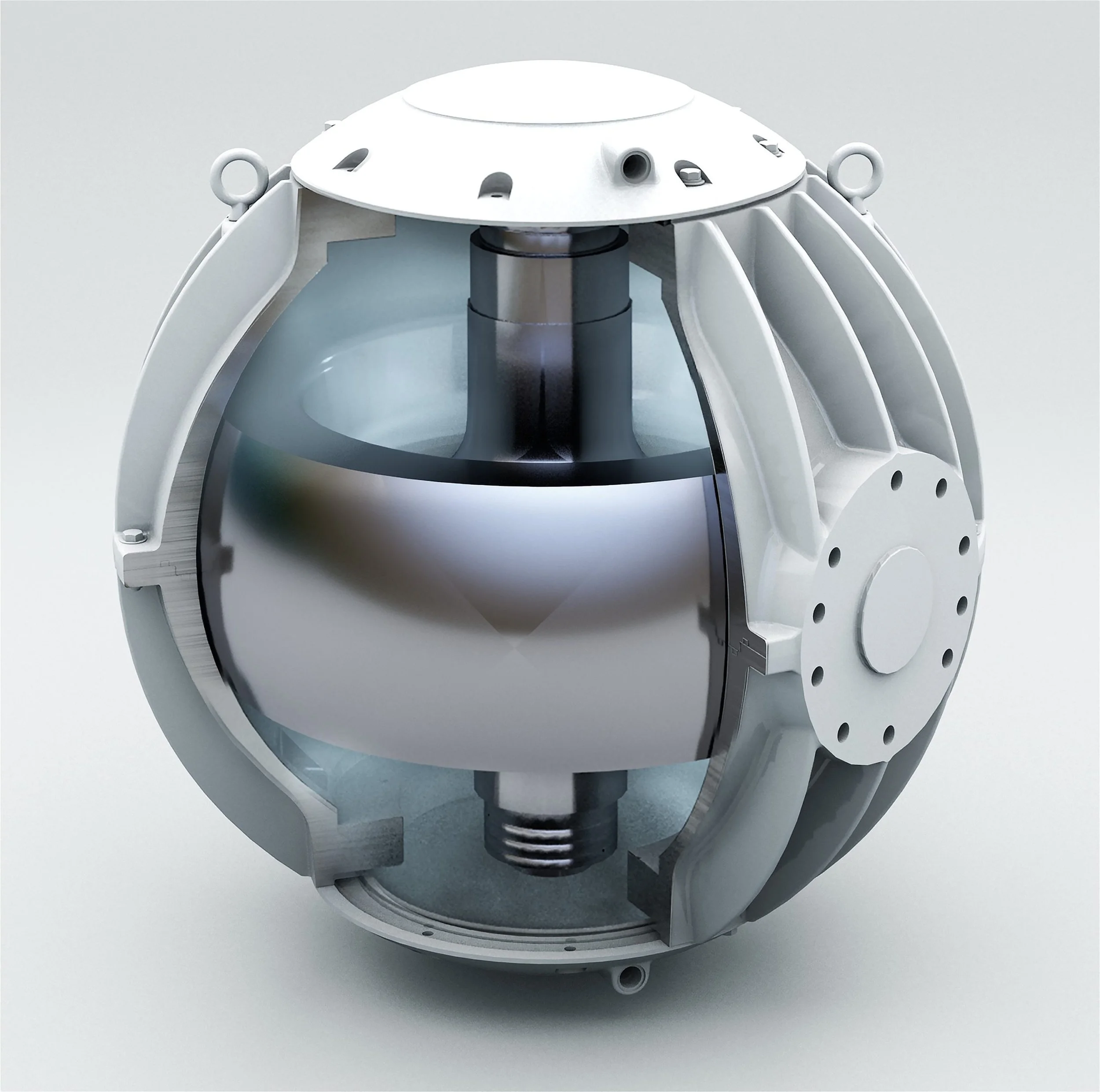
Seakeeper is a completely internal, computer-controlled gyroscope that can eliminate up to 95% of boat roll on vessels as small as 23’ and larger than 200’. Inside a vacuum encapsulation, a flywheel spins at speeds of up to 9,750 rpm. When the boat rolls, the sphere tilts fore and aft (precesses), producing a powerful gyroscopic torque to port and starboard that counteracts the boat roll.
WHAT IS THE DIFFERENCE BETWEEN THE SEAKEEPER STABILIZER AND FIN STABILIZERS?
Seakepeer completely distinguishes itself from fin stabilizers in these aspects:
Zero-speed fins require short bursts of power that far exceed the stored energy requirements of Seakeeper’s spinning flywheel. In other words, fins don’t have the ability to exert a constant roll-reducing torque throughout the vessels entire natural roll period, which can cause the boat to jerk.
Fins create drag, reducing both speed and efficiency, thus ruling them out for high-speed boats.
Seakeeper is completely internal with no underwater hull penetrations, unlike fin stabilizers. External fins create a hazard as that can easily hit or snag common underwater features or debris.
Stabilizing fins are typically only available for boats greater than 40 or 50 feet (12 or 15 meters), so they leave out the majority of boats on the water today.You can find all the information you need on our Seakeeper Installation pricing here.
THE EASY AND BEST CHOICE FOR A STABILIZER IN ANY VESSEL IS THE SEAKEEPER!
When you’re buying a boat, or choosing to refit your current boat, you could research for days about everything on board. Between the boat itself, the electronics, power, and other additional options, it can be overwhelming! But when you’re looking for stabilization, the choice is simple, and more than 10,000 Seakeeper Owners can agree! Choosing a Seakeeper over fin stabilizers makes for the most comfortable, efficient boat you’ll ever own.
For more information on the best Stabilizer or to get your quote today, contact us here.

Seakeeper Extended Warranty: Everything you need to know!
Everything you need to know about your Seakeeper Gyro Stabilizer Warranty.
Today we discuss Seakeeper Warranties. How many of us throw the boxes away and never send the registration card in on most things we purchase. Then the time comes when something fails and we sure wish we had. I am guilty! We, at Tri Sea, can take the headache out of the process for you and can register your unit for you anytime during your standard warranty period as well as keep you up to date on all of your Extended Warranty options.
But first, lets go over the top 3 questions Seakeeper owners ask us about their warranty!
How long is your Seakeeper warranty?
Each Seakeeper stabilizer comes with a standard 2 year/2000 hour warranty (whichever comes first).
What Seakeeper Parts are covered under Warranty?
The Seakeeper warranty is a “bumper to bumper” warranty, so to speak. This means it covers everything inside the Seakeeper itself. If you are having boat side or installation issues they would be warrantied by your installer.
What does it cost to Extend your seakeeper warranty?
Price to extend your warranty is a fraction of what you could spend in parts cost, let alone a full replacement, if anything were to need a repair during the period of potential extension.
What Extended Warranty Options are there?
Silver ( Adds 2 years to your warranty for a total of 4 years/2000 hours)
Gold ( Adds 2 years AND 1000 hours for a total of 4 years/3000 hours)
Platinum ( Adds 3 years AND 2000 hours for a total of 5 years/4000 hours)
You can see all of your Seakeeper Warranty options and pricing HERE and you can fill out the form to request an Extended Warranty HERE or at www.seakeeperwarranty.com. As always if you need help contact us at (833) Tri-Gyro or info@triseakeeper.com and remember, Seakeeper is all we do!

Seakeeper Alarm Codes: 23 Common Fault Codes (& What to Do)
There are many Seakeeper alarm codes you might see on your display, from overheating to low brake pressure. We explain 23 Seakeeper fault codes & what to do if you see these errors.
Seakeeper Alarm Codes: 23 Common Fault Codes (& What to Do)
There are many Seakeeper alarm codes you might see on your display, from overheating to low brake pressure. We explain 23 Seakeeper fault codes & what to do if you see these errors.
Seakeeper alarm codes play a vital role in ensuring the smooth and safe operation of Seakeeper units. These codes indicate specific faults and errors that may arise during the unit's operation. Understanding and addressing these codes promptly is crucial to maintain the performance and longevity of the Seakeeper system. In this article, we will delve into the various alarm codes and explore the recommended steps to troubleshoot and resolve them efficiently.
Common Seakeeper alarm codes explained
Here's a quick roundup of the most common Seakeeper alarm codes which you might come across, along with some guidelines on what to do when you receive on of these faults.
Seakeeper alarm code 6 (drive temp high)
Seakeeper Alarm Code 6 is triggered when the internal drive temp exceeds 65C (70C for SK3). Do not worry, your Seakeeper is not overheating at this time. The Seakeeper’s is programmed to shut down at this temperature before and damage can be done to the unit.
The Alarm Code 6 is most often due to issues with the flow of seawater to the unit slowing or stopping all together.
What to do about a Seakeeper fault code 6
Verify the Boats seawater pump is on and supplying an adequate flow of seawater to the heat exchanger.
If there is no flow, start by checking sea cock is open and the strainer is free of debris.
Check the lines to and from the seawater pump and unit to be sure it is free of debris.
If you find no debris or clogs in the seawater line, it's possible that you need a new Seawater pump or that the issue lies somewhere within the unit itself. In this case, you will want to call your local dealer to troubleshoot and diagnose the unit.
Seakeeper alarm code 8 (coolant pump 1 fault)
This alarm indicates an issue with the Glycol Coolant Pump, which is found on every Seakeeper model. It could mean the pump is either unplugged or not functioning due to a faulty pump or wiring.
It is possible with air cavitation at the pump it may or may not pull current erratically and throw this alarm. Glycol flow can be confirmed by viewing fluid movement in the reservoir.
What to do about a Seakeeper fault code 8
Determine if the pump is running by sound or touch and if there is flow. Glycol flow can be confirmed by viewing fluid movement in the reservoir.
If the pump appears to be running but is noisy, then it is likely that there is air in the glycol loop. Top off glycol/water to reservoir and cycle the pump off for a few seconds the on again several times to purge the air.
If the pump is cavitating, super hot to the touch or is not running you must contact your local dealer to troubleshoot and diagnose the unit.
Note: In some cases the Code 8 can be caused by the same issues as the code 6. See code 6 info
Seakeeper alarm code 12, 13 and 14 (brake pressure low)
These alarms occur when hydraulic system pressure drops below approx. 72 PSI. If the fault can be reset but persistently occurs when processing it is likely there may be an actual oil leak.
If it cannot be reset at all, a component in that system has failed. The only way to troubleshoot and repair this code is through a Seakeeper Dealer with the proper tools and parts to check each component.
What to do about a Seakeeper fault codes 12, 13 and 14
Check all the duetsch plug connections to all sensors on the unit and make sure nothing is loose, then attempt to reset it and cycle power (I bet we sound like the cable company right now)
Inspect in and around your unit for obvious signs of oil. If you find oil take some photos and send them to your local dealer to expedite a Seakeeper service. A Seakeeper dealer will still need to attend to repair and clear this alarm code for you
Seakeeper alarm code 26 and 27 (valve faults)
These alarms are directly related to the solenoid valves on your unit and most usually happen due to a bad solenoid valve.
What to do about a Seakeeper fault codes 26 and 27
Please do nothing on your own and call your local dealer. These valves can get dangerously hot and present a burn warning to the skin. Do not reset your unit or attempt to clear the codes.
Seakeeper alarm code 37, 38 and 39 (travel and motion faults)
These alarms are most often due to a problem in the hydraulic system such as air or debris in the line but can be caused by other issues in the system. Oftentimes a simple annual service can clear these codes.
What to do about a Seakeeper fault codes 37, 38 and 39
Call your local dealer to troubleshoot and repair the issue; do not attempt to reset or clear these codes.
Seakeeper alarm code 40, 41, 42, 44 and 45 (power and electrical sensor faults)
These Seakeeper Alarm Codes are almost always due to what we call "boat side electrical issues". When we refer to "boat side" issues, we are referring to wiring, batteries and interference from other systems on the vessel that are not part of the actual Seakeeper itself and therefore would not be covered under your standard Seakeeper warranty. Note: Components installed with the Seakeeper are not included in the Seakeeper standard warranty but may be under warranty through your boat builder or installation company.
What to do about a Seakeeper fault codes 40, 41, 42, 44 and 45
We would recommend you or your regular servicing mechanic check your batteries, charging system, motors, generators, breakers and all potential boatside electrical issues prior to spending the money to have a seakeeper dealer come out and attempt diagnostics.
In our experience, 9 times out of ten, these Seakeeper error codes are battery and electrical related.
Seakeeper alarm code 50, 55 and 56 (angle sensor faults)
These alarms most often occur if the gyro angle goes to its end stop during precession, or if the unit "senses" the angle sensor is out of calibration.
What to do about a Seakeeper fault codes 50, 55 and 56
Unfortunately there is not much you can do here but call your local Seakeeper dealer to diagnose and repair the issue.
Seakeeper alarm code 82 and 83 (drive faults)
These alarms are triggered when the unit controller stops receiving power or communication from the drive itself. This oftentimes can mean there has been a loss of power coming into the unit itself or it could mean the unit drive box is not functioning as intended.
What to do about a Seakeeper fault codes 82 and 83
Reset and Cycle power
Check your breakers and all power sources are on and working as intended
If the above does not allow you to clear the code and continue, call your local Seakeeper dealer for diagnostics
We do not recommend attempting any kind of diagnostic when dealing with a Seakeeper alarm code 82 or 83 as they relate to AC power. Please call your local Seakeeper dealer to assist.
Seakeeper alarm code 98 (AC mains low)
The drive is reporting to the Computer that the AC power flow has fallen lower than 80 VAC.
This code only occurs on AC powered Seakeeper Units 5 and above and is disabled on Seakeeper Units 3 and below.
This code most commonly occurs when a boat owner is switching from Shore Power to Generator power or, vice versa. When the switch of power source is not completed fast enough for the Seakeeper sensor's liking, it throws up code 98.
What to do about a Seakeeper fault code 98
Reset and Cycle power
Check your breakers and all power sources are on and working as intended
If the above does not allow you to clear the code and continue, call your local Seakeeper dealer for diagnostics
We do not recommend attempting any kind of diagnostic into this code as it relates to AC power so please call your local Seakeeper dealer to assist.
Seakeeper alarm code 251 (no connection to gyro)
This alarm code suggests the Seakeeper display has lost its connection or communication with the Seakeeper
A common cause for this alarm is the loosening of a display cable, cable connection or adapter.
Other causes can be the need for a software update , a failure in the display plug, or ECU connection issues.
What to do about a Seakeeper fault code 251
Clear and Cycle power
You may attempt to check all of your display connections and your deutch plug connections at the unit to be sure nothing is loose.
If none of the above clears your alarm code, you should call your local Seakeeper dealer to come and diagnose.
Key takeaways on Seakeeper fault codes
Seakeeper alarm codes serve as valuable indicators of potential faults and errors within the Seakeeper units, safeguarding them from potential damage. When encountering these Seakeeper problems, addressing the underlying issues promptly and accurately is essential to ensure the optimal functionality and longevity of the system.
By following the recommended troubleshooting steps provided in this article and seeking professional assistance from authorized Seakeeper dealers when needed, boat owners can effectively manage and resolve these alarm codes.
Regular maintenance ( Annual Services) and diligent attention to potential electrical and mechanical issues will contribute to the uninterrupted enjoyment of the Seakeeper experience. If you have questions about your Seakeeper or need assistance, we have convenient offices in Tampa, Naples, Miami, Florida Keys as well as our main Seakeeper Fort Lauderdale location.
What is a Seakeeper Gyro & How Does a Seakeeper Gyro Work?
What is a Seakeeper on a boat, & how does a Seakeeper work? We explain how the Seakeeper gyro stabilizer system functions at rest & underway on yachts & ships

What is a Seakeeper?
What is a Seakeeper on a boat, & how does a Seakeeper work? We explain how the Seakeeper gyro stabilizer system functions at rest & underway on yachts & ships
What is a Seakeeper stabilizer? It's a gyro stabilizer for boats that is vacuum encapsulated to reduce weight and power usage while increasing the gyroscope’s effectiveness. The Seakeeper is water cooled, which allows it to work more efficiently than the air cooled gyroscopes on the market and which can significantly improve your boating experience. A Seakeeper can be installed just about anywhere on your boat – with no ventilation requirements. If you’re interested in increasing your boat’s stability and in improving your ride – whatever the vessel’s size – the Seakeeper is the only choice.
What is a Seakeeper on a boat?
A Seakeeper represents leading marine motion control technology that is designed to eliminate at least 80% of a boat's pitch and roll. This is accomplished by dampening the vessel's cyclic roll motions on the water and can vastly improve the boating experience for everyone. The Seakeeper is a gyro stabilizer for boats, which means it employs the physics of gyroscopes as a sea stabilizer. The science of gyroscopic motion ensures that rotating objects tend to maintain the orientation of their rotation, and its use in the Seakeeper produces a mighty gyroscopic torque to port and starboard, which effectively and efficiently battles the problem of boat roll.
How does a Seakeeper work?
How does the Seakeeper work? The Seakeeper gyro stabilizer system applies the physics of gyroscopes through the vacuum encapsulation of a sphere in which a steel flywheel spins at an intense rate. The effects of this gyroscopic stabilizer allow a boat that's going into a roll to precess ( or tilt ) fore and aft counteracting the rolling motion and is designed to provide a smooth ride.
There are several elements of smart technology in the Seakeeper that are helping to revolutionize the boating industry by providing excellent vessel stabilization.
The Seakeeper's vacuum encapsulation
By vacuum encapsulating the Seakeeper gyro, all the following advantages are achieved:
The flywheel's weight is cut considerably
The flywheel can spin three times faster
The Seakeeper's critical components are protected from the marine environment
The effects of air friction are not a concern.
Each of these is something that an air cooled gyroscopic system simply cannot offer.
The Seakeeper's hydraulic braking system and active control system
Seakeeper’s incorporate a hydraulic braking system controlled by their patented active control programming. This allows them to utilize revolutionary technology, which not only gauges the sea state but also reacts instantaneously to it, affording optimal performance, regardless of speeds and sea conditions. The Seakeeper is designed to counteract the motion of the sea automatically with no input required on the part of the person handling the boat.
The Seakeeper's Cooling System
The Seakeeper's patented cooling system removes heat from within the vacuum enclosure and dissipates it through a glycol/seawater combination by utilizing a custom heat exchanger. Additionally, the Seakeeper uses only modest electrical power. All of this makes the Seakeeper the most efficient gyro stabilizer choice for even smaller boats, and it can be installed virtually anywhere on board.
Something Extra for Fishermen
In addition to all that, the Seakeeper also keeps your hull stable, which allows your fishing sonar system to remain trained on your fishing target. If fishing is your game, Seakeeper’s are fishing boat stabilizers that you shouldn't ignore. Boats experience the most roll when they're at rest, which translates to peak fishing, and the stabilization afforded by a Seakeeper can prove invaluable to your overall catch.
What does a Seakeeper do that any other gyroscope for boats doesn’t?
The Seakeeper is the only gyro stabilization system which is encapsulated in a vacuum with Helium. Because or this there is much less friction and heat inside the Seakeeper gyro, the majority of the heat is contained to the electronic equipment which is cooled by the Seakeeper patented cooling system. The other gyro systems on the market must be cooled by the air and as a result requires considerable space for ventilation as well as slower gyro spinning speed which require their units to be much heavier, require more electricity and they areless efficient overall than the Seakeeper stabilization system.
The water cooling system
The seawater cooling system in the Seakeeper offers a range of advantages over the air cooling approach in other boat gyros, including:
The seawater cooling system has fewer power needs than, weighs less, and takes up less space than air cooled gyroscopic systems
In order for a non-encapsulated gyro to provide the same optimal performance at all speeds, it would have to either be much larger or draw considerably more power to achieve that same level of angular momentum
The Seakeeper's seawater cooling system is small and is contained within the unit itself except for the small exterior seawater pump.
Years of research and development went into the Seakeeper's seawater cooling system, and it shows.
Tri Sea Stabilizers
At Tri Sea Stabilizers, we're so committed to the Seakeeper's superiority in terms of stable performance that it's all we do. We are the only Seakeeper dealer anywhere in the Southwest that specializes exclusively in the Seakeeper. We've installed these amazing machine’s in vessels as cozy as 23 feet and in yachts as dramatic as 165 feet. We take great pride in the reputation we've earned for ourselves as being the largest and top performing Seakeeper installation company in the industry.
Some of the attributes that set our Veteran owned and operated business include:
We were the 2022 Seakeeper Dealer of the year
We've been an award winning dealer for six years and counting
We've earned BBB A-plus accreditation
We have the most certified Seakeeper Master Techs on our crew – many of whom have earned American Boat and Yacht Council (ABYC) Certification, the ultimate credential as a Master Technician
We have over 75 years of combined Seakeeper experience across our multiple locations
In other words, we're far more than just a dealer, and along with our Seakeeper Fort Lauderdale location we have convenient offices in Tampa, Naples, Miami, and the Florida Keys. This is in addition to our Wilmington, North Carolina, location – where we represent in the Mid-Atlantic. If you're interested in learning more about the Seakeeper itself, about the Seakeeper cost for a specific unit, or about the installation and service we offer, we've got the answers you're looking for and welcome your enquiries.
Not sure if the Seakeeper is for you, we offer a demo ride on our Seakeeper-equipped boat that will afford you a far better understanding of exactly how effective this unique boat stabilization system is. To schedule a demo ride or to learn more, simply give us a call at 833-TRI-GYRO, email us at info@triseakeeper.com or use our contact page today.
FAQs
Does Seakeeper work underway?
Yes, Seakeeper eliminates almost all resonant roll at all speeds, but a Seakeeper won't correct static heel or bow steering. Boats spend most of their time at rest, and it is at rest and at slow speeds when boat roll is most problematic and a stabilizer is appreciated the most.
Boat roll refers to that side-to-side motion so common to boat's and so closely associated with seasickness. A boat that's in motion is inherently more stable than a boat that's at rest, which means that – all things being equal – your Seakeeper has far less work to do when you're cruising.
However, Our customers also report that due to Seakeeper, they now enjoy traveling at displacement speeds with less noise, less fuel, and now with less roll, and they can enjoy the journey not just the destination.
A lot of the time you spend on your boat is at anchor or otherwise at rest, which makes the kind of stabilizing that the Seakeeper offers especially beneficial. While you don't need that roll stabilization as much when you're underway, it, nevertheless, has advantageous applications. For example, it also allows you to seamlessly adjust in the wake of larger vessels.
Does a Seakeeper work on a catamaran?
The short answer is YES! The long answer is: The properties of catamarans differ greatly from monohulls, and they vary significantly from one cat model to the next and Seakeeper corporate wrote all of their programming for a monohull. For this reason, Seakeeper cannot guarantee the same performance on a multihull vessel that they can on a monohull.
We have completed quite a few catamaran Seakeeper installations and can say catamarans require more angular momentum to achieve the same stabilization as a similarly sized monohull vessel. So typically we would move up a size from the normal sizing guidelines to get the desired stabilization.
What is a gyro on a boat, is it the same as a Seakeeper?
No, not really. While a Seakeeper is a Gyro Stabilizer, not all boat gyros are created equal. Unlike most gyro stabilizers, the Seakeeper is vacuum encapsulated, water cooled and incorporates a patented active control system to help you make the most of your time on the water.
Seakeeper 35 Review Including Specs and Performance
In this Seakeeper 35 review we'll take a look at Seakeeper 35 weight, dimensions & other specs as well as looking at performance and use cases for the Seakeeper 35
Our Seakeeper 35 review gives you all the information you need!
Interested in the Seakeeper 35 gyro? Here you can learn everything you should know about Seakeeper 35 specs and more.
Seakeeper 35 review
Welcome to our Seakeeper 35 review which contains all the necessary information about this particular Seakeeper model. We will take a look at Seakeeper 35 specifications, including the weight and dimensions, along with other informative and interesting details that people often ask us about.
Seakeeper 35 specs
Before we move on to the Seakeeper 35 specs, if you interested in seeing current pricing information for the unit and installation click the following link for the Seakeeper 35 price.
Seakeeper 35 weight
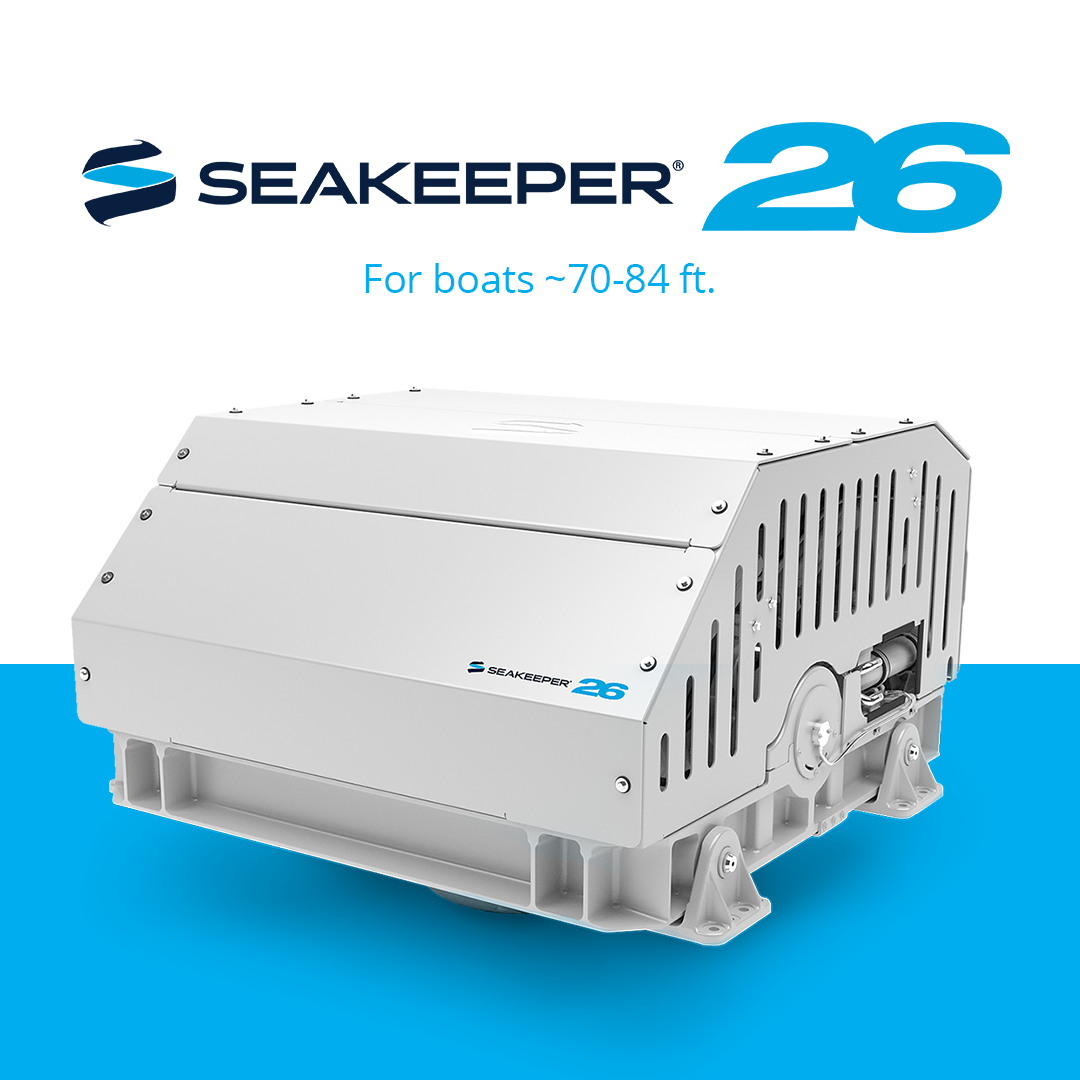
The Seakeeper 35 weighs around 3920 pounds (1778 kilograms) and is exclusively engineered for boats of 85 feet in length and longer, and up to 100 tons (200,000 pounds) in weight, but multiple units can be installed on boats that are larger than that.
Seakeeper 35 dimensions
The Seakeeper 35 dimensions are approximately 53 inches in length, 56 inches in width, and 43 inches in height.
Design
The engineers at Seakeeper designed the Seakeeper 35 for the sphere to swing in between the structure itself allowing the unit to fit in tighter spaces you would not normally think of.
Power
The Seakeeper 35 requires an AC power source to operate. The system has a relatively low power consumption pulling around 10 amps after it is fully spooled up.
The Seakeeper 35 system's power usage is optimized with the help of advanced control algorithms that modify its operation according to the sea conditions.
Fitting
The installation process for the Seakeeper 35 requires specific knowledge and expertise, so the unit should always be installed by a professional factory certified Seakeeper dealer.
Taking care of your Seakeeper 35 gyrostabilizer
The maintenance schedule for a seakeeper 35 mainly involves ensuring it is kept clean and free from salt and moisture, and also to have it inspected and serviced every year by a Seakeeper Dealer who is factory certified.
A typical Seakeeper service includes the removal and replacement of the system's Fluids, replacing the accumulator, component inspection, and making the necessary repairs or adjustments. An annual inspection is the most important part of the the Seakeeper service.
Owners of the Seakeeper 35 can benefit from a comprehensive warranty that covers labor and parts for up to two years or 2000 hours (whichever comes first). For more information, see our Seakeeper maintenance page.
TLDR: Key takeaways on the Seakeeper 35 gyro
Thanks for taking the time to read our Seakeeper 35 review, we hope you found it helpful! Remember to jot down our phone number (833) 874-4976, as Seakeeper is our specialty. When you're ready to discuss things further, please give us a call!
| Seakeeper 35 specification | Value |
|---|---|
| Seakeeper 35 weight (lbs) | 3920 lbs |
| Seakeeper 35 weight (kgs) | 1778 kg |
| Seakeeper 35 dimensions (inches) | 52.8 L x 55.9 W x 42.4 H |
| Seakeeper 35 dimensions (centimeters) | 132.4 L x 141.9 W x 107.6 H |
Seakeeper 35 can be installed on boats of 85 feet in length and larger
Seakeeper 35 requires an annual service and inspection for health longevity
Seakeeper 35 comes with a display but can be incorporated with the customers MFD if the software is new enough
Seakeeper 26 Review: Specs, Dimensions, Weight & Performance
In this Seakeeper 26 review we'll take a look at Seakeeper 26 weight, dimensions & other specs as well as looking at performance and use cases for the Seakeeper 26
Our Seakeeper 26 review gives you all the information you need!
Interested in the Seakeeper 26? Here you can find out everything you need to know about Seakeeper 26 specs and more.
Seakeeper 26 review
Welcome to our Seakeeper 26 review which contains all the necessary information about this particular Seakeeper model. Here we will discuss Seakeeper 26 specifications, including the weight and dimensions which people often inquire about, along with other informative and interesting details.
Seakeeper 26 specs
Before we proceed to the Seakeeper 26 specs, if you require current pricing information for the unit and installation click the following link for the Seakeeper 26 price.
Seakeeper 26 weight
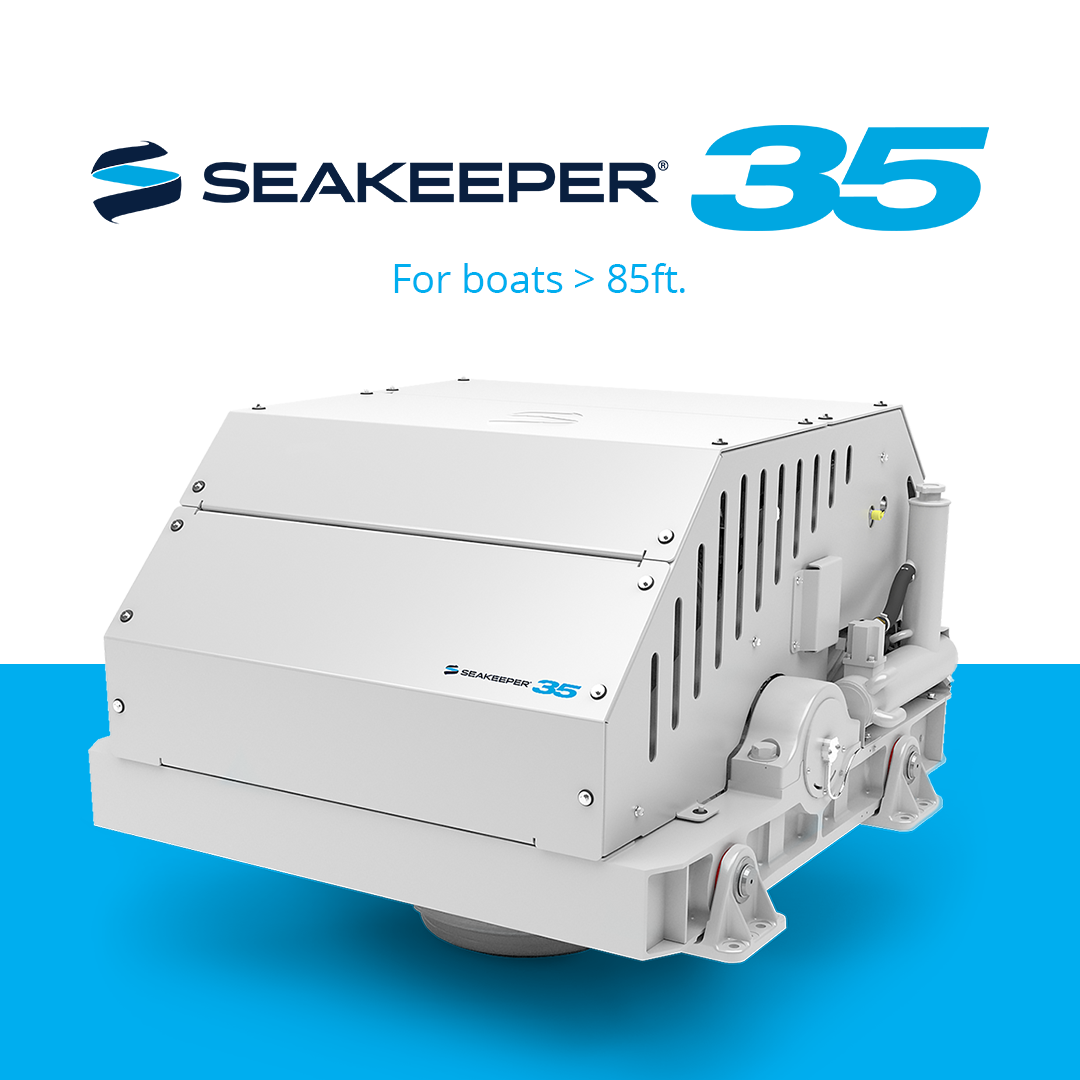
The Seakeeper 26 weighs around 3155 pounds (1431 kilograms) and is exclusively engineered for boats ranging from 70 to 84 feet in length and up to 75 tons (150,000 pounds) in weight.
Seakeeper 26 dimensions
The Seakeeper 26 dimensions are approximately 51 inches in length, 56 inches in width, and 40 inches in height.
Design
The engineers at Seakeeper designed the Seakeeper 26 for the sphere to swing in between the structure itself allowing the unit to fit in tighter spaces you would not normally think of.
Power
The Seakeeper 26 requires an AC power source to operate. The system has a relatively low power consumption pulling around 10 amps after it is fully spooled up.
The Seakeeper 26 system's power usage is optimized with the help of advanced control algorithms that modify its operation according to the sea conditions.
Fitting
The Seakeeper 26 should always be installed by professional factory certified Seakeeper dealers, as the installation process requires specific knowledge and expertise.
Taking care of your Seakeeper 26 gyrostabilizer
The maintenance schedule for a seakeeper 26 involves ensuring it is kept clean and free from salt and moisture, and also to have it serviced and inspected annually by a Seakeeper Dealer who is factory certified.
A typical Seakeeper service includes removing and replacing the system's Fluids, replacing the accumulator, inspecting its components, and making necessary adjustments or repairs. A yearly inspection is the most important component of the the Seakeeper service.
Boat owners of the Seakeeper 26 can benefit from a comprehensive warranty that covers parts and labor for up to two years or 2000 hours, whichever comes first. For more info, see our Seakeeper maintenance page.
TLDR: Key takeaways on the Seakeeper 26 gyro
We appreciate you taking the time to read our Seakeeper 26 review and we hope you found it to be of use! Remember to write down our number (833) 874-4976, as Seakeeper is our specialty. When you're ready to discuss further, feel free to give us a call!
| Seakeeper 26 specification | Value |
|---|---|
| Seakeeper 26 weight (lbs) | 3155 lbs |
| Seakeeper 26 weight (kgs) | 1431 kg |
| Seakeeper 26 dimensions (inches) | 50.8 L x 55.9 W x 39.4 H |
| Seakeeper 26 dimensions (centimeters) | 128.9 L x 141.9 W x 100.0 H |
Seakeeper 26 can be installed on boats 70 to 84 feet in length
Seakeeper 26 requires an annual service and inspection for health longevity
Seakeeper 26 comes with a display but can be incorporated with the customers MFD if the software is new enough




-
January 2026
- Jan 31, 2026 Seakeeper Dealer Tri Sea Stabilizers Newsletter 11
- Jan 2, 2026 Seakeeper Dealer Tri Sea Stabilizers Newsletter 10
- November 2025
- October 2024
- September 2024
- August 2024
- July 2024
- June 2024
- May 2024
- April 2024
- March 2024
- January 2024
-
December 2023
- Dec 20, 2023 What Is The Best Yacht Stabilizer?
- November 2023
- August 2023
-
July 2023
- Jul 21, 2023 Seakeeper 35 Review Including Specs and Performance
- Jul 20, 2023 Seakeeper 26 Review: Specs, Dimensions, Weight & Performance
- Jul 18, 2023 Seakeeper 18 Review Including Specs and Performance
- Jul 5, 2023 Seakeeper Ride Review of Performance Underway
- June 2023
- May 2023
- April 2023